


How to Remove a Bank Vault Door (Legally)
January 09 2026A Weekend Emergency in Jacksonville
Planning a bank vault job? Here’s what you’ll need: industrial concrete saws, diamond blades rated for reinforced concrete, a crew of skilled operators, several days of extremely loud work in broad daylight, and—most importantly—the bank’s permission.
Or you could just call Valute Demolition when you need a vault door removed for whatever reason you might have.
Let me tell you about the time we got that exact call.
The Friday Night Emergency
It’s 4:47 PM on a Friday. We’re wrapping up for the weekend when the phone rings.
“Can you remove a bank vault door this weekend?”
Not next weekend. Not “when you have availability.” This weekend.
The client was in the middle of a major commercial renovation project in Jacksonville. Everything was on schedule until they hit an unexpected problem: a massive Diebold vault door, probably installed sometime in the 1970s, embedded in a concrete wall that was now directly in the path of their new construction plans.
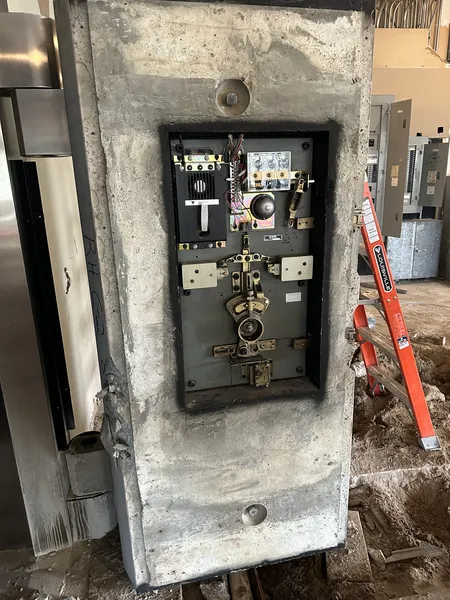
Monday morning inspection. Either the vault door was gone, or the project timeline exploded into costly delays, rescheduled subcontractors, and a general contractor relationship that wouldn’t survive the conversation.
The vault door had to go. By Monday.
Step 1: Assess What You’re Actually Dealing With
Here’s what makes bank vault doors different from your average demolition project:
The door itself weighed approximately 6,000 pounds. This particular Diebold unit featured reinforced concrete construction with a beautiful brass locking mechanism—the kind of hardware they just don’t make anymore.
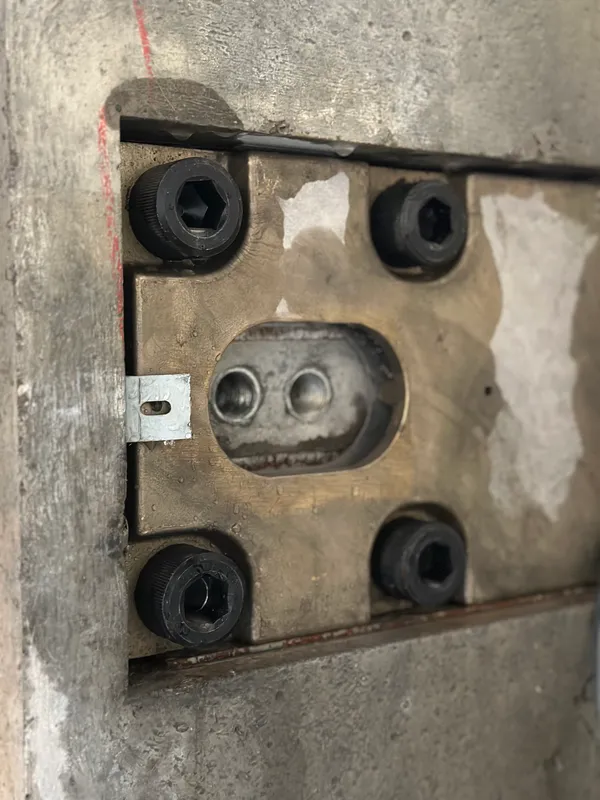
The hinges had a hidden anti-theft feature: installers used a chemical bonding compound during installation that permanently locked the fasteners in place. You can’t unscrew them. The entire vault structure – door, hinges, concrete surround – becomes one permanent assembly, 24 inches of reinforced concrete with rebar running through it.
That meant we couldn’t unbolt the door and haul it out. We had to cut the entire thing in place. The engineers who built these in the 60s and 70s weren’t messing around.
Oh, and we had roughly 48 hours to figure it out.
Step 2: Realize Your Best Equipment Is Unavailable
In a perfect world, we would have used our wire saw for this job. A diamond wire saw can slice through reinforced concrete like butter, with minimal vibration and surgical precision. It’s the ideal tool for this kind of extraction.
Our wire saw was 100 miles away on a pier demolition project.
So we pivoted. The client needed a solution, not excuses about equipment logistics.
We grabbed our hand saws—24-inch concrete cutting saws with diamond blades—and got to work.
Step 3: Cut Through a 24-Inch-Thick Reinforced Vault Door (The Hard Way)
Let me be clear: hand-cutting a bank vault door is not the easy way to do this job. It’s loud, it’s dusty, it creates massive vibration, and it requires operators who actually know what they’re doing.
Here’s the problem: a 24-inch saw blade cuts approximately 9.5 inches deep. The vault door was 24 inches thick.
That meant we had to cut from three sides to section through the door completely.
The concrete had steel mesh mixed into it—not just rebar you could try to work around, but steel fibers distributed throughout the entire mixture. The first few blades didn’t last long. When you bid a job assuming one blade cuts X amount of concrete and it only delivers 20%, you’ve just turned profit into loss. We tested multiple blade types to find one that would actually perform in this application without eating through our margins.
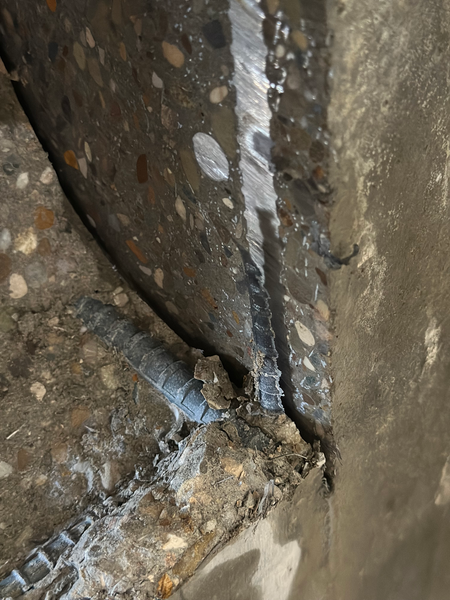
And here’s where it got tricky: the client had open trenches throughout the work area with exposed water pipes, already prepared and ready for Monday’s inspection. We couldn’t let chunks of concrete vault door fall uncontrolled.
We had to cut, then carefully extract each piece one by one without damaging the exposed plumbing below. Every section had to be controlled, lifted clear, and removed before we could make the next cut.
The Results
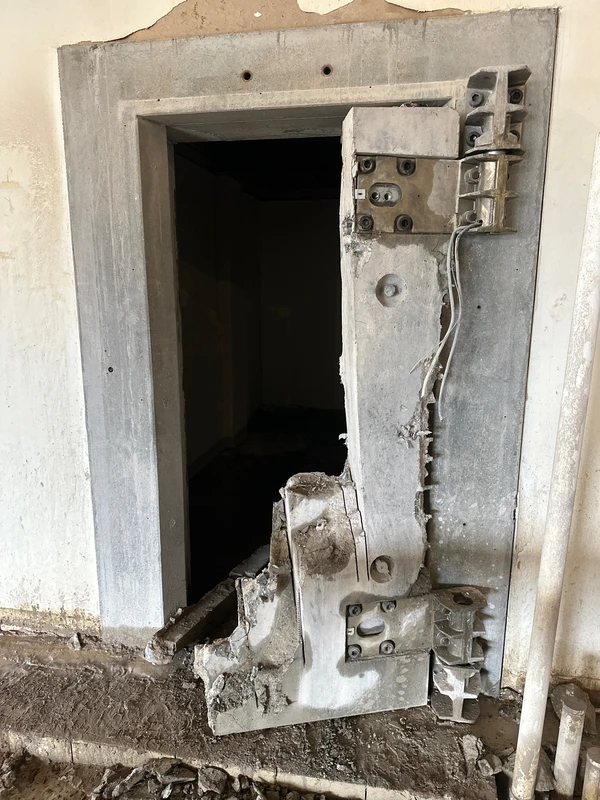
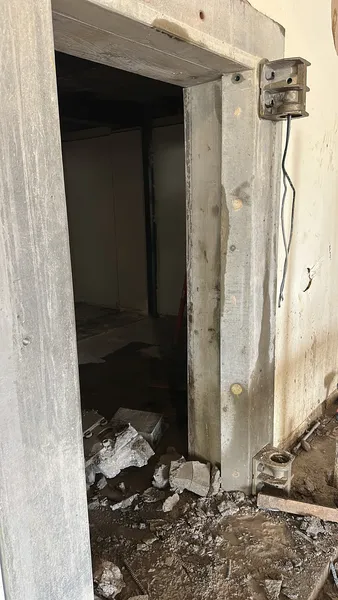
Cutting finished Sunday evening. We came back Monday morning to clean up the site before the inspection.
The vault door was gone, the site was clean, and the inspection passed without issue.
So, How Do You Remove a Bank Vault Door (Legally)?
You hire professionals who:
- Answer emergency calls
- Have the technical expertise
- Understand that schedule matters
- Can hand-cut reinforced concrete when necessary
The illegal way takes planning, a crew, and about 10–20 years in federal prison.
The legal way takes one phone call.
Need Emergency Demolition or Concrete Cutting in Jacksonville?
Valute Demolition serves the greater Jacksonville area and surrounding counties with both scheduled and emergency commercial demolition services. We specialize in jobs where structural integrity and precision matter, costs are real, and the work needs to be clean and safe.
Bank vaults, elevator shafts, structural concrete, precision cutting, and complete demolition services—all performed in-house without subcontractors.