


Chimney Removal in Jacksonville: Cost, Process, and What Can Go Wrong
January 31 2026Chimney removal looks simple until you’re actually doing it.
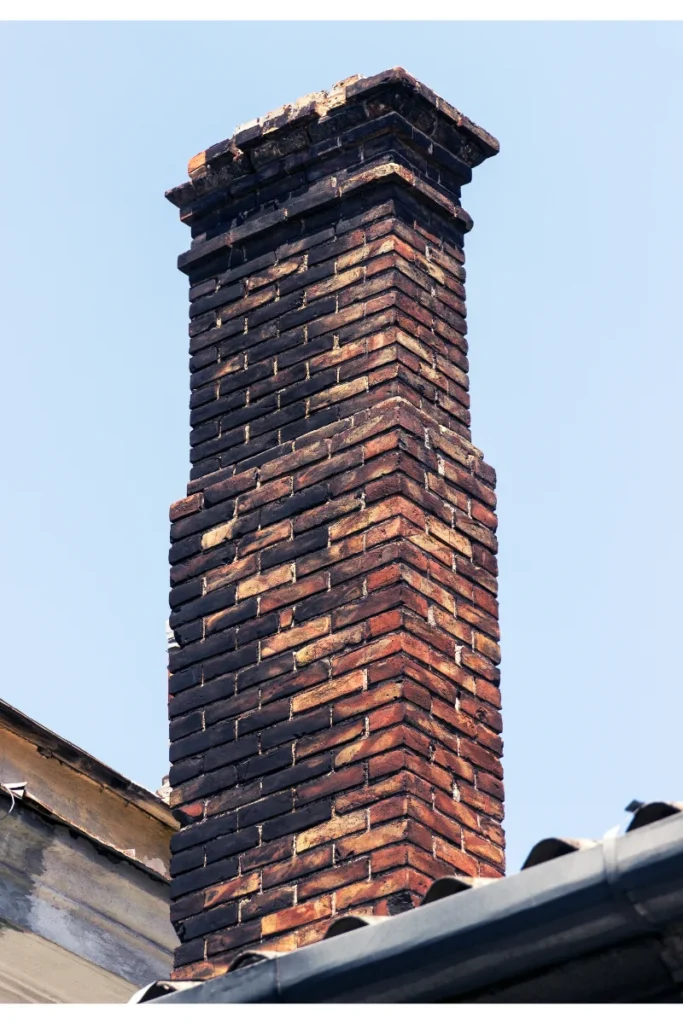
That brick stack you see from the street might have a clay flue liner inside. It might be tied into framing in the attic. It might be leaning two degrees off plumb from decades of foundation movement. Or you might be removing it from an occupied home where dropping debris isn’t an option.
At Valute Demolition, we remove chimneys throughout Jacksonville and the surrounding areas. Below is what actually goes into chimney demolition — the real conditions we run into and how the work is done safely without turning your house into a repair project.
When a Chimney Is Leaning
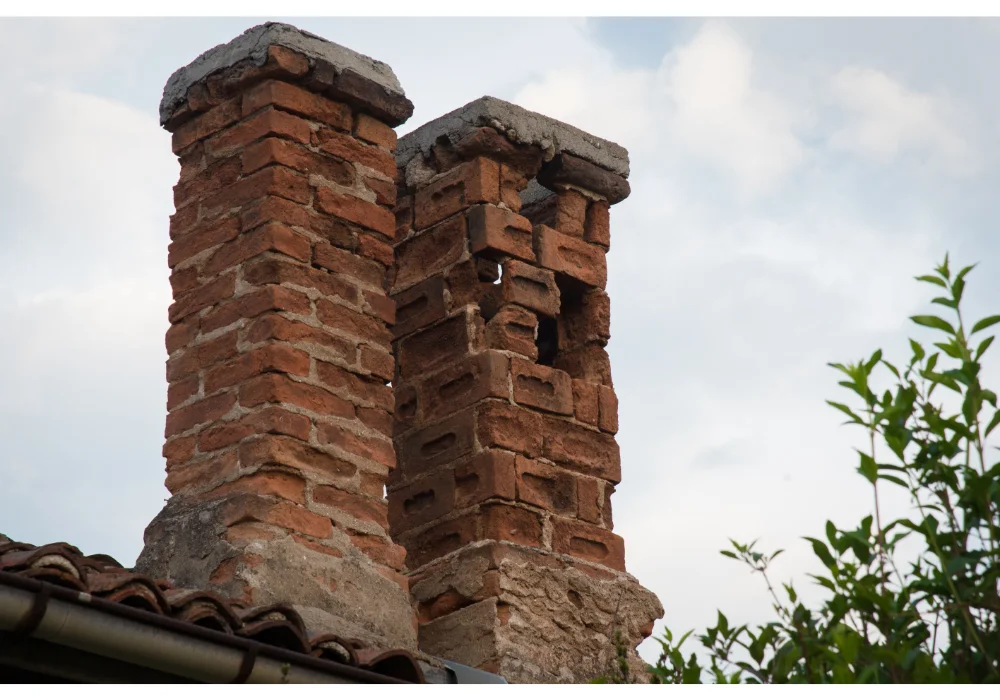
A leaning chimney is common in older Jacksonville homes, especially where soil movement and foundation settling are involved.
Before demolition starts, we determine whether the lean is:
- Historic and stable (same angle for years)
- Active and progressing (pulling away from the structure)
Those two situations are treated very differently.
A stable lean allows for controlled top-down removal. An active lean requires immediate stabilization decisions before anyone steps on the roof.
Why this matters:
Vibration and impact that would be fine on a straight chimney can cause failure on a compromised one. Instead of aggressive demolition, we remove smaller sections, watch for movement, and adjust in real time.
Real scenario:
We removed a visibly leaning chimney in Neptune Beach that had been monitored by the homeowner for years. No shortcuts — top-down removal, smaller brick sections than usual, constant monitoring. No roof damage, no surprises.
Removing Chimneys From Occupied Homes
When a home or building is occupied, chimney removal becomes a containment problem, not a brute-force demolition job.
You can’t just drop bricks and clean up later when people are living or working below.
Containment measures include:
- Full tarp systems
- Sealed work zones
- Controlled debris lowering
- Dust management from start to finish
This isn’t optional. It’s the difference between a clean job and weeks of cleanup issues.
Why the Attic Section Is the Most Dangerous Part
Most chimneys pass through three zones:
- Above the roofline
- The attic or crawlspace
- Interior living space
The attic section is where experience matters most.
You’re working in tight quarters, limited visibility, awkward body positioning, and heavy brick — with drywall ceilings directly below. One dropped brick doesn’t bounce. It goes straight through the ceiling into a bedroom or living room.
A single mistake can mean:
- Ceiling repairs ($500–$1,000+)
- Interior repainting
- Homeowner frustration
Because of this, we lower bricks by hand in the attic instead of relying on gravity. It’s slower — and it’s the only way to guarantee no interior damage.
The Creosote Cleanup Problem (A Real One)
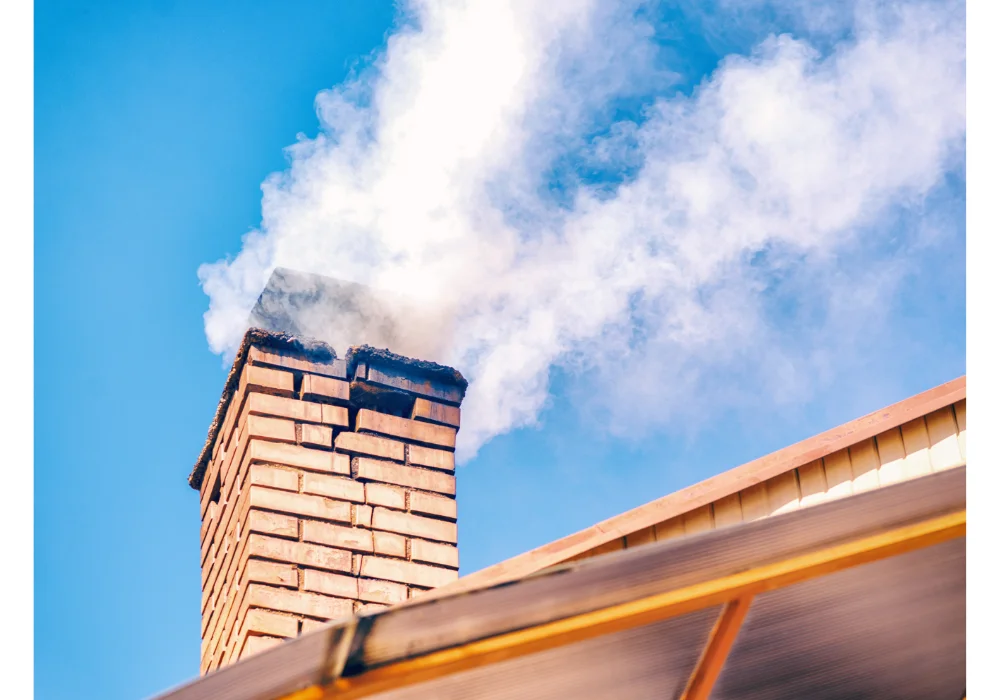
Creosote is the black, tar-like residue that builds up inside chimneys over decades of fireplace use.
On one job, a creosote-soaked brick came loose during attic removal. A crew member lost grip, and the brick hit the floor.
It exploded into a cloud of black dust.
What should have taken minutes turned into two hours of detailed cleanup. Because we already had tarps and containment in place, the damage was limited and fully resolved.
Without containment, that dust would have traveled through the HVAC system and settled throughout the house for months.
This is exactly why chimney removal isn’t “just brickwork.”
Hidden Chimney Construction You Can’t See From the Street
Many chimneys are multi-material structures.
Inside the brick exterior, we often find:
- Clay or terracotta flue liners
- Metal liners
- Older mortar mixes
- Insulation materials
This changes the demolition approach.
Why it matters:
- Clay liners fracture differently than brick
- Sharp debris requires careful handling
- Liner sections may need extraction before outer brick removal
Older Chimneys and Asbestos Risk
Pre-1980s chimneys may contain asbestos in mortar or insulation. When suspected, testing is required before demolition proceeds. If asbestos is confirmed, removal follows a different process with licensed abatement — no shortcuts.
The 3-Stage Chimney Removal Process
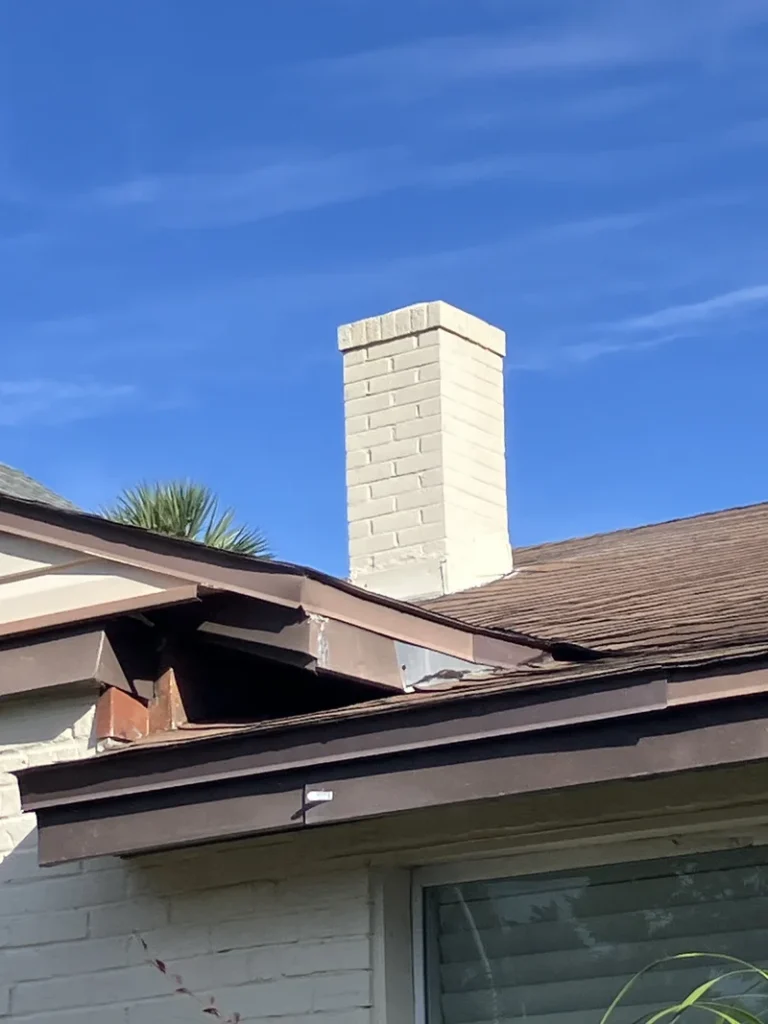
Stage 1: Above the Roofline
This is the visible portion. Removal is performed top-down, section by section. Weather matters here, but the work is generally straightforward.
Stage 2: The Attic Section
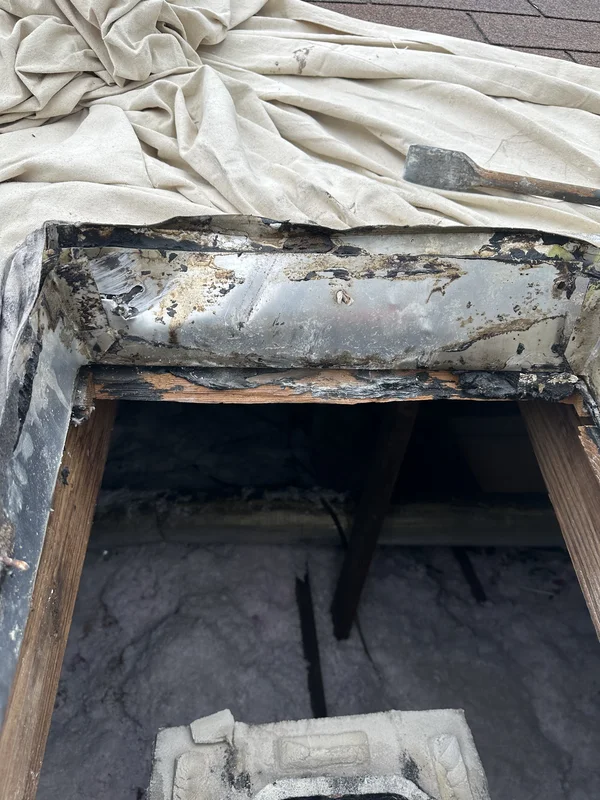
The most technical stage. Tight space, heavy materials, and zero tolerance for dropped debris. Bricks are lowered manually to protect ceilings and framing.
Stage 3: Interior Removal
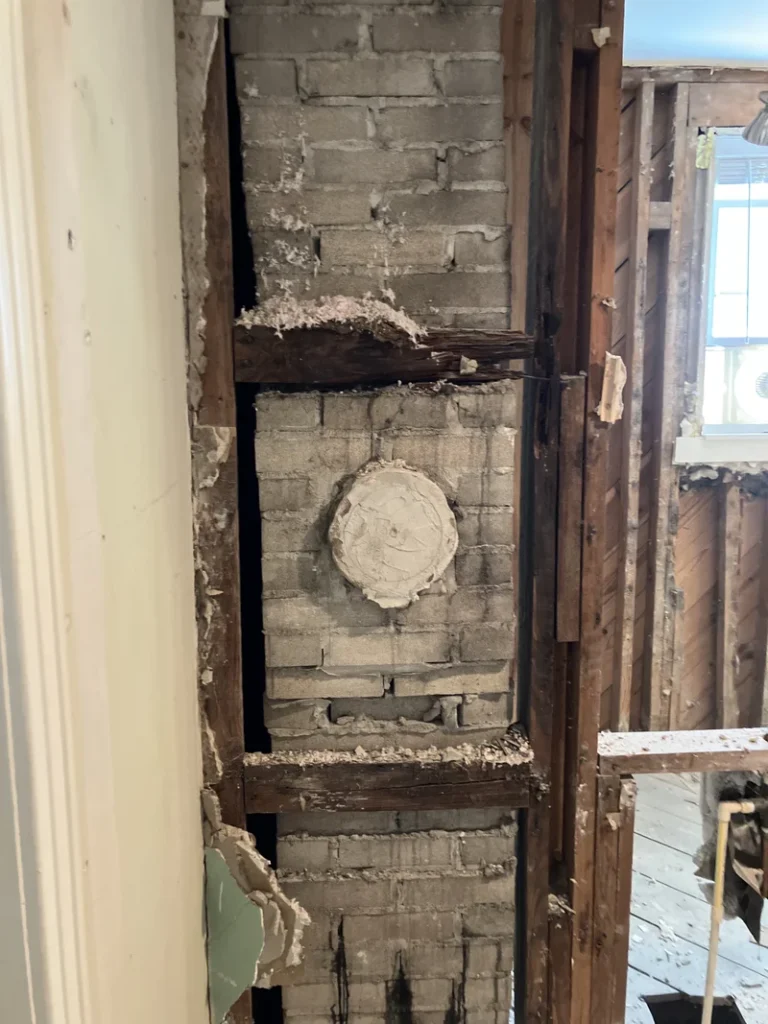
If chimney demolition continues below the ceiling into living space, this section is removed with full interior protection and cleanup. Easier physically, but still carefully controlled.
Each stage requires a different mindset — controlled work and fall protection on the roof, precision in the attic, and full containment inside.
Chimney Removal Cost in Jacksonville
Homeowners always ask this first — and for good reason.
Typical price ranges:
- Above-roofline only: $1,500 – $3,000
- Full chimney removal: $3,000 – $6,500+
- Complex cases (leaning, tight attic, heavy containment): higher
Cost depends on:
- Chimney height and footprint
- Attic accessibility
- Creosote buildup
- Structural condition
- Interior finishes below
Every chimney is different. On-site evaluation is the only way to price it accurately.
Do You Need a Permit to Remove a Chimney in Jacksonville?
In many cases, yes.
If chimney removal affects:
- Roof structure
- Framing
- Load paths
- Interior finishes
A permit may be required. We help homeowners understand when permitting applies and coordinate documentation as needed so there are no delays.
What Happens After the Chimney Is Removed?
Our work covers chimney removal. Final roof patching is completed by a qualified roofing contractor.
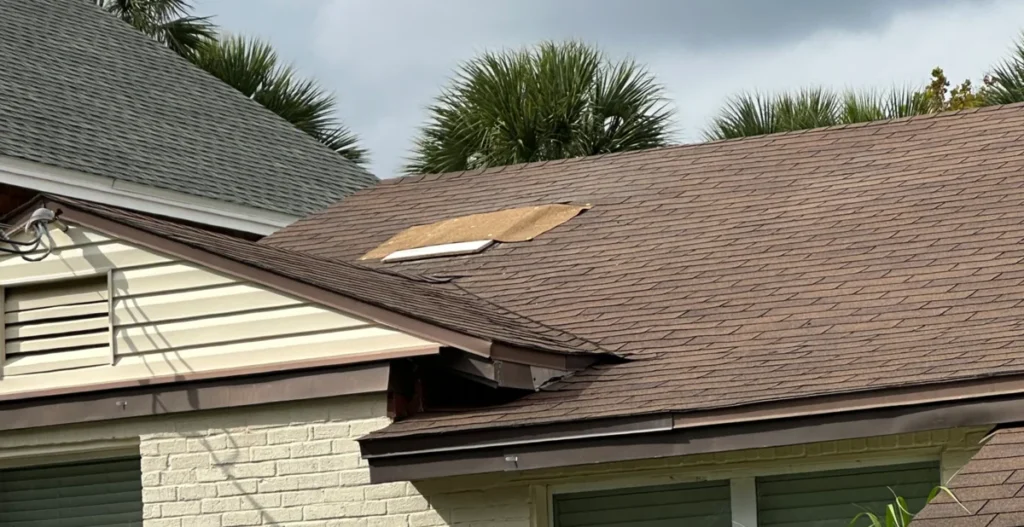
Once demolition is complete:
- A roofing contractor seals the roof opening
- Interior framing and drywall are repaired if needed
- Finishes are restored to match existing spaces
Timeline:
- Chimney removal: 1–2 days
- Roof patching: same day or scheduled separately
- Interior repairs: depends on scope
Everything is explained upfront so there are no surprises.
Chimney Removal in Jacksonville – Valute Demolition
Chimney removal isn’t complicated — but it is unforgiving.
Leaning structures, occupied homes, attic risks, hidden materials — these are the realities of the work. The difference between a smooth project and a costly mess comes down to experience and process.
If you’re considering chimney removal in Jacksonville, we’ll assess your specific situation, explain exactly what’s involved, and execute the work without damaging your home or leaving cleanup behind.